
Home / Off-Grid Water Systems
Off-Grid Wells & Water Systems
Power
Solar, wind, or backup
Storage
Sized to your use
Permits
Handled for you
Emergency
Off the Grid · Anywhere in Florida
Where Off-Grid Water Makes Sense
Raw Land & New Homesteads
Bringing utility power out to a remote homesite can be slow and costly. A new well with its own pump power puts water on site while the house goes up.
Hunting Camps & Cabins
No more hauling jugs or running a generator all weekend. A full storage tank is waiting for you when you pull in for opening day.
Remote Pastures & Livestock
Troughs and stock tanks on the back pasture, kept full by sun or wind with no power line to run. See our agricultural wells.
Job Sites Without Power
Temporary or permanent water for construction and remote work sites, with portable or permanent tanks. More on commercial wells.
Water Through Outages & Hurricanes
On the grid, but tired of losing water every time a storm takes the power out? Give the well a power source of its own, ready for storm season.
Tiny Homes & RV Lots on Acreage
A small home or RV pad still needs a dependable water source. We scale the pump and storage to a small household, so the system fits the way you live.
The Complete System, From Well to Tap
02
Pump Power
03
Storage
04
Pressure
05
Treatment
Planning Your Water
Daily use depends on who and what the well serves. A full-time family, a weekend cabin, a vegetable garden, and a herd of cattle all draw very different amounts. We talk it through with you and build the estimate around how you actually live and work.
Days of reserve is how long you want to go with the pump resting. Plan for the weather Florida actually gets: a run of stormy summer afternoons, a gray week in January, a calm spell when the windmill stands still. The reserve should ride out all of them with room to spare.
Once those two numbers are settled, we size the pump, the panels or windmill, and the tanks together, so no single part holds the rest of the system back.
Why Storage Beats Batteries
In most off-grid water systems, a bigger tank does more for reliability than a bigger battery bank.
- A full tank delivers water at night, in a storm, or while the pump is down for service.
- A solar pump does its work in daylight and fills the tank for the evening.
- A tank has no charge to run down and very little to maintain.
- Batteries still earn a place as backup power for the pump, arranged with licensed electricians as needed.
Power Options for the Pump
- Solar pump: the usual pick for homes, cabins, camps, and job sites with open, unshaded ground for the panels. How solar pumps work.
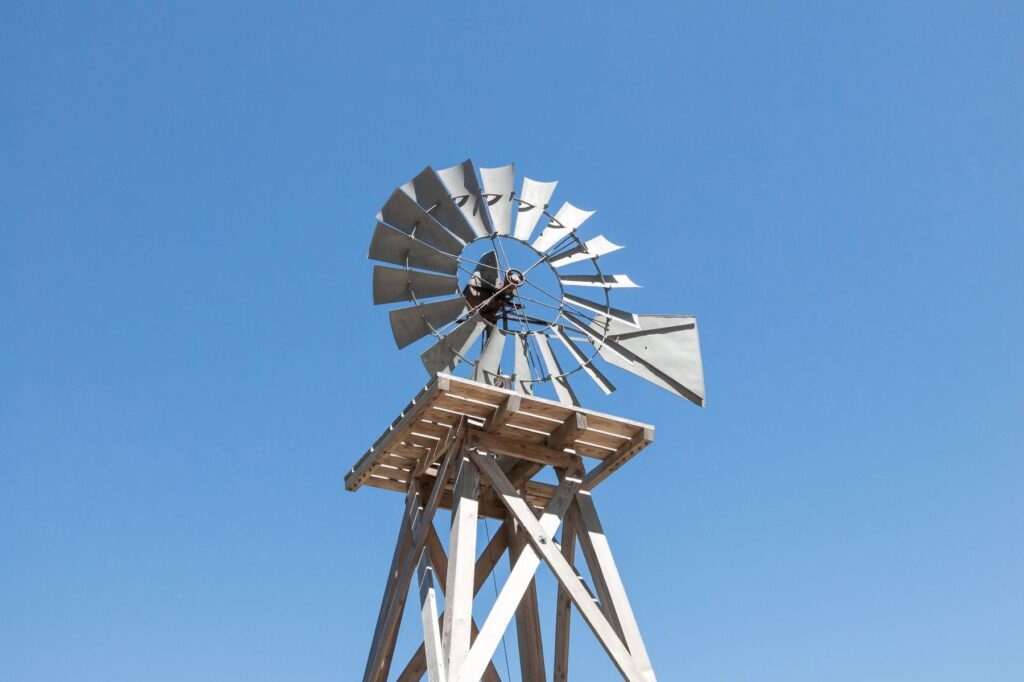
- Windmill pump: a natural match for livestock water on open pasture that catches a steady breeze, and a mill near the house can double as a landmark. Windmill installs and repair.
- Backup power: a battery bank or generator can run the pump when the sun and wind won’t, or when the grid is down. We work with licensed electricians as needed for backup power options.
Not sure which fits your land? We look at how much water you need, how deep the water sits, and how the site gets sun and wind, then recommend a setup in plain terms.
No-Power Backup
Hand Pumps for Water With No Power
We help with hand pumps. We can help you add one to a suitable well as a backup, set one on a new well, or get an old one working again.
The right hand pump comes down to the depth to water and the way your well was built. A pitcher pump only lifts from shallow water. Deeper wells need a different style of hand pump, and not every well is a good candidate, so we look at yours before recommending anything.
- Backup water through hurricanes and long outages
- A simple fallback for cabins, camps, and pastures
- No panels, wiring, or fuel to keep up

Hurricane Season
Water When the Grid Goes Down
That means drinking water, working toilets, and full troughs while you wait for the lines to come back. If your home stays on the grid, you can get the same security from your existing well. We can add solar pumping, help you add a hand pump, and work with licensed electricians as needed for battery or generator backup.
After a Flood
- If floodwater covered the wellhead, don’t drink the water yet. Use bottled water until a test shows it is safe.
- Florida Department of Health guidance is to disinfect a flooded well, flush it, and test for bacteria before anyone drinks from it.
- A sanitary well cap that seals tightly helps keep floodwater out of the well in the first place.
- We can disinfect the well, help you get the water tested, and repair storm damage. See well repair and water testing.
Getting a Rig to Remote Land
A drill rig is a heavy truck, so it needs a path it can drive in on. Tell us about the access: the road surface, gates, soft or wet ground, low branches, and how close we can get to the well site. Photos help.
Permits still apply off the grid. Florida requires a permit for every new well, and septic tanks and drainfields must sit at least 75 feet from a private drinking water well, so we site the well around both. We prepare and file the permit, build to state standards, and file the completion report within 30 days of finishing.
Estimates are free, and financing is available.