
Home / Well Abandonment & Plugging
Well Abandonment & Plugging
Permits
Handled for you
Method
Grouted bottom to top
Paperwork
Completion report filed
Service area
When a Well Has to Be Plugged
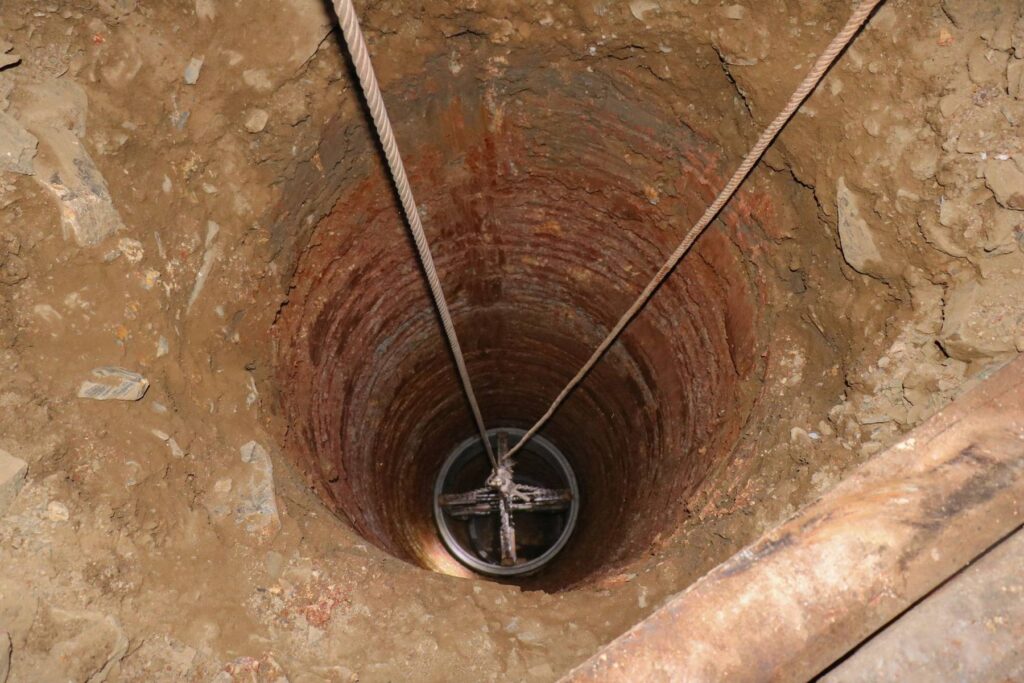
At that point, state rules call for the well to be plugged under a permit by a licensed water well contractor. A well you simply stopped using does not go away on its own. The casing corrodes, the cap cracks, and the open hole becomes a shortcut for fertilizer, septic effluent, and floodwater to reach the groundwater.
Not sure where your well stands? If you plan to use it again, it has to stay capped watertight in the meantime. If you never will, it needs to be plugged, because a cap alone leaves the open hole underneath. Hooking up to city water? Many owners keep a sound well for irrigation with its plumbing fully separate from the city line, though your utility may set its own rules. We will look at the well and tell you plainly which path fits.
Common Reasons We Plug Wells
- The home is switching over to city water
- A property with an unused well is being sold or bought
- Land is being cleared or developed
- A failed well is being replaced with a new one
- The casing is too damaged to repair
- A flowing artesian well can no longer be controlled
- A forgotten well turns up during construction
How We Plug a Well, Step by Step
01
Permit
02
Fill From the Bottom Up
03
Cement Cap
04
Completion Report
Protecting the Aquifer
Why Plugging Old Wells Matters
United States Geological Survey studies of Okeechobee County named two likely ways brackish water gets into the shallow aquifer that most homes drink from: Floridan wells left flowing freely at the surface, and Floridan wells with corroded casings. Both let mineralized water from deep below rise and mix with the fresh water near the surface.
A properly plugged well closes that pathway for good, and it takes a hazard off your land.
Protects Drinking Water
Closes an open path into the same aquifer that supplies the wells around you.
Keeps Aquifers Apart
Stops brackish water from deep zones rising into fresh water through old, rusted casing.
Removes a Hazard
Open or rotted wellheads are a danger to children, pets, and livestock.
Clears the Way to Sell
An unused, unplugged well is one more item for a buyer’s inspector to flag.
Flowing Artesian Wells
Florida law requires every flowing artesian well to have a valve that controls its discharge. Letting a well run nonstop without a control is not allowed, civil penalties can apply, and a well whose poor-quality water threatens the aquifer may be ordered plugged.
Plenty of older ranch and grove wells were never fitted with a proper control, or their valves and casings rusted out long ago. Whatever shape yours is in, there is a fix.
Valve It
We install or replace a control valve so the well flows only when you open it, which keeps you on the right side of state law.
Repair It
We fix leaking wellheads and damaged casing that let water escape around the valve or into shallower zones.
Plug It
If the well is no longer needed, or the casing is too far gone, we plug it to Florida standards under a permit.
Statewide Service
For Developers, Land Clearing, & Real Estate
Developers & Contractors
When wells turn up on a development site, we permit and plug every one of them and schedule the work around your clearing and grading. One contractor handles the permits and reports for the whole site.
Land Clearing & Farm Conversions
Retiring pasture, grove, or dairy ground often means retiring its wells too: old irrigation wells, stock wells, and windmill wells that no longer have a job to do.
Real Estate Sales
An unused well can slow down a closing. We plug it under permit and file the completion report, so buyers, agents, and inspectors have the documentation they need.