
Home / Windmills & Ag Solar
Windmill Water Pumps & Agricultural Solar
Wind-Powered Water
Practical, Ornamental, and Still Working
Practical: Water Beyond the Power Lines
A windmill was built for one job, lifting water where there is no power, and it still does that job on Florida pastures with no fuel to haul and no electric bill.
- Livestock tanks and troughs: kept filled for cattle and horses, with storage banked for calm days.
- Livestock ponds: a steady flow of well water keeps them topped off through the dry season.
- Remote pastures: water a long way from the barn and the nearest power line.
Ornamental, Yet Fully Functional
A windmill turning beside a pond or at the head of the drive is a landmark people remember. Set over a working well, it is also a pump that earns its keep.
- Ornamental ponds: a steady inflow of well water keeps the water moving and the level up.
- Lakes: a mill on the bank keeps feeding well water in whenever the wind blows.
- A working landmark: the look of a classic farm windmill, with a real job to do.
Windmill Installation
A windmill has to be matched to its well. The wheel size, the stroke, and the pump cylinder all have to balance against the depth to water and your daily demand. A bigger cylinder lifts more water per stroke but takes more wind to turn, so we size the system as a unit instead of piece by piece.
Location matters just as much. The wheel needs clean, steady wind above the tree line and away from buildings, and the tower needs solid footings anchored for Florida weather. For a mill beside a pond or in full view of the house, we balance where it looks best with where it catches the wind.
What Goes Into the System
- Tower and anchored footings
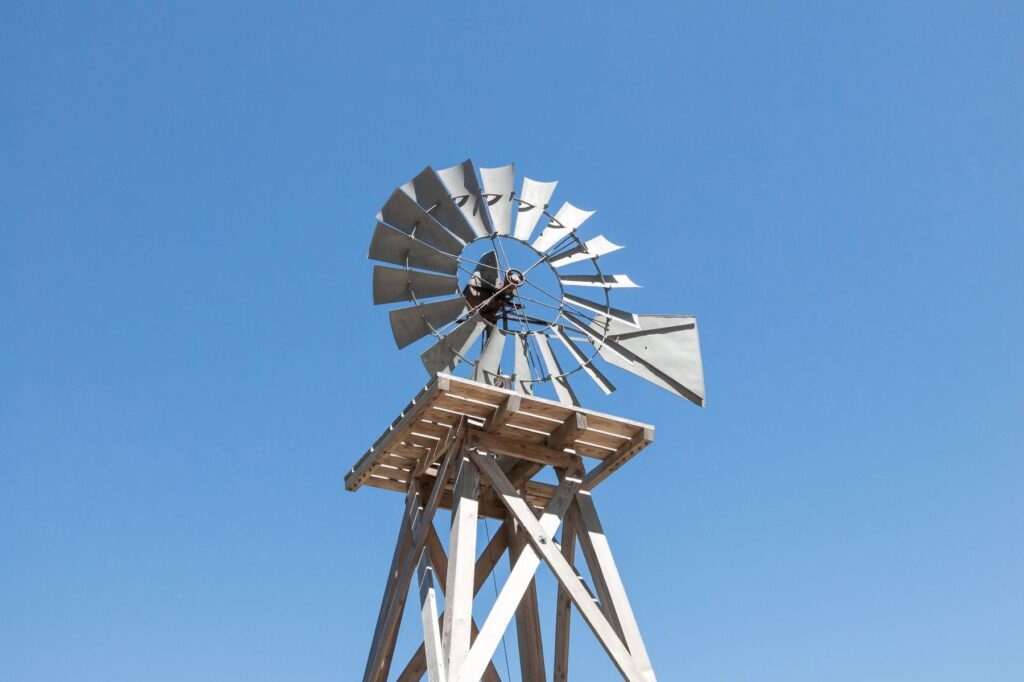
- Wheel, tail, and the furling mechanism that turns the wheel out of high wind
- Gearbox, or pump head, that converts spin into an up-and-down stroke
- Pump rod and drop pipe running down the well
- Pump cylinder with leathers and check valves
- Storage tank or trough with an overflow, or a fill line to your pond
Windmill Repair, Diagnostics, & Maintenance
We start by watching it run. How the wheel tracks the wind, how the rod strokes, and how long water takes to reach the tank once the wheel starts turning all tell us where to look. Then we pull only what needs pulling, from the pump rod and cylinder to the gearbox, and repair or replace the worn parts. Older mills are familiar work too, and if a part is no longer made or a tower is unsafe to climb, we say so and lay out your options.
Routine Maintenance
Scheduled maintenance visits catch normal wear before it turns into a breakdown. Each visit covers:
- Gearbox oil changed and moving parts greased
- Blades, tail, and furl spring checked for bends, wear, and alignment
- Tower bolts, braces, and anchors tightened and checked for rust
- Leathers, check valves, and rod couplings inspected
- Output measured at the tank against what the mill should deliver
Signs Your Windmill Needs Service
- The wheel turns, but little or no water reaches the tank
- Output has dropped from what it used to pump
- Knocking, squealing, or grinding from the head
- The wheel will not face the wind, or will not turn out of it in a storm
- Water is slow to reach the tank after the wheel starts turning
- The tower sways, leans, or has loose or rusted bolts
Why Wind Still Works on Florida Ranches
Clean & Renewable
Wind costs nothing and never runs out. No fuel, no exhaust, and no power bill for the water it lifts.
Low Running Cost
Once the mill is up, your ongoing spending comes down to oil, grease, and the occasional part.
Built for the Back Pasture
A windmill does not care how far it stands from a power line, which makes it a natural fit for remote wells and complete off-grid water systems.
Simple Mechanics
Everything is mechanical, so it can be diagnosed and rebuilt in the field. There is no circuit board to fail.
Many Uses
Fill troughs and stock tanks, keep ponds topped off, supply a household, water a garden, or feed small irrigation systems.
Unaffected by Outages
When a storm takes down the grid, a windmill keeps pumping as long as the wind is blowing.
Agricultural Solar Power
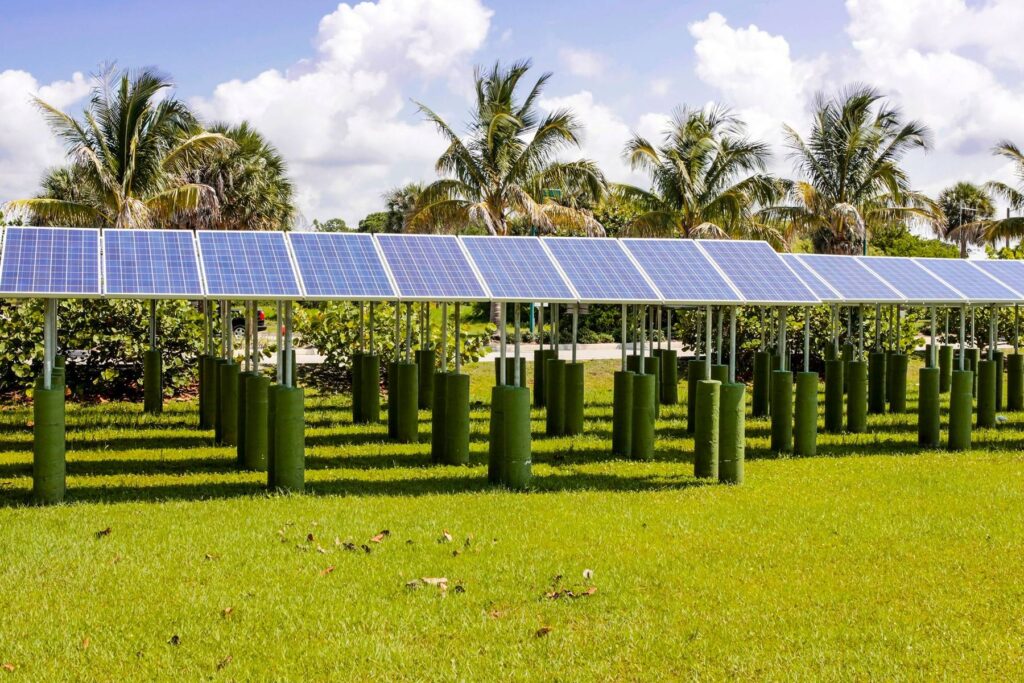
Beyond well pumps, we design and install solar power for the equipment that keeps an agricultural operation running. Each system is sized to the load it has to carry and built for Florida heat, humidity, and summer storms.
- Irrigation pumps: water groves, nurseries, and pasture without waiting on a fuel delivery.
- Livestock water: keep troughs and tanks full in pastures far from the barn.
- Greenhouse lighting: power lights, fans, and controls in greenhouses and shade houses.
- Electric fencing: keep fence chargers running on remote pasture with no outlet in sight.
Benefits of Solar Power on the Farm
Energy Independence
Make your own power where the grid is far away, unreliable, or too costly to extend.
Lower Fuel Costs
Cut the diesel and gasoline that generators burn, and the hours spent keeping them fueled and running.
Clean Power
No exhaust and no fuel spills near livestock, crops, or the water supply.
Little Upkeep
No engine to service. Panels need an occasional rinse and a periodic look at wiring and controls.
Room to Grow
Start with one pump or fence charger and add panels as the operation expands.
Dependable Operations
Essential equipment keeps working without anyone babysitting a generator, with storage to carry it past sundown.
Okeechobee Roots
Why Landowners Call American Drilling
- Family-owned since 1984, with roots right here in Okeechobee
- One contractor for the well, the windmill, the solar system, the pump, and the tanks
- Straight advice, including when solar fits better than wind, or the other way around
- Licensed and insured, with permits handled when the well needs work
- 24/7 emergency service when livestock are out of water
- Statewide travel for agricultural jobs, big and small
- Free estimates, financing available, se habla español